
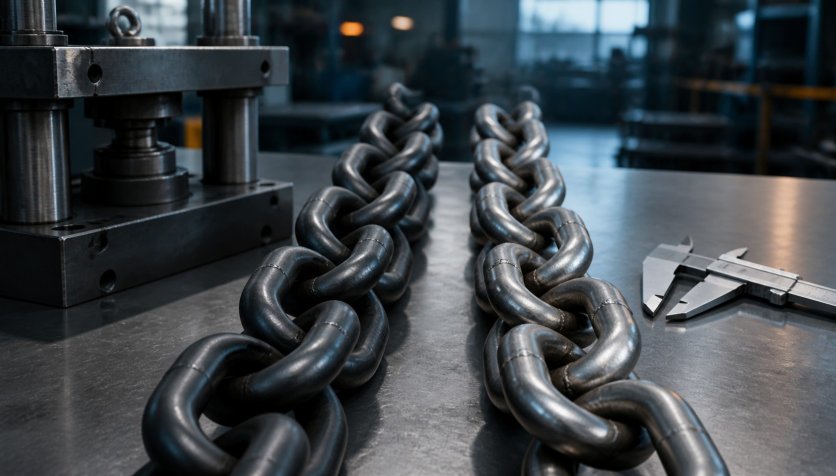
What Are the Differences Between Grade 80 and Grade 100 Chains?
Selecting the correct chain for lifting and load-handling operations is essential to both operational safety and system efficiency. Grade 80 and Grade 100 chains are among the most common options used in industrial lifting applications.
Both chain grades are designed for heavy-duty applications requiring high strength. However, there are important differences in their load capacity, weight, applications, and compatible system components.
This guide examines the characteristics and differences of Grade 80 and Grade 100 chains and explains the factors to consider when selecting the appropriate chain grade.
What Does Chain Grade Mean?
Chain grade is a technical classification that represents the chain’s material and strength properties. It is not determined solely by the chain’s appearance or diameter.
Two chains with the same nominal diameter may have different working load limits due to differences in material composition and manufacturing properties. Therefore, link diameter alone is not sufficient when selecting a lifting chain.
The following factors are considered together when determining a chain’s grade:
-
Properties of the alloy steel used
-
Manufacturing method
-
Heat-treatment process
-
Strength values
-
Testing and quality-control processes
-
Applicable manufacturing standard
-
Working load limit declared by the manufacturer
For a chain to be classified as Grade 80 or Grade 100, it must meet the relevant technical criteria and be appropriately identified.
What Is a Grade 80 Chain?
Grade 80 chain is a heavy-duty chain grade manufactured from high-strength alloy steel and widely used in lifting applications.
It may be used in crane operations, chain sling systems, load lifting, and heavy-material handling applications. Grade 80 chains form a lifting system when combined with compatible hooks, master links, and connection components.
Common applications include:
-
Single-leg chain slings
-
Double-leg chain slings
-
Multi-leg lifting systems
-
Crane and hoist applications
-
Heavy-load handling operations
-
Construction and worksite applications
-
Factory maintenance operations
-
Port and logistics applications
When used correctly and maintained regularly, Grade 80 chains can provide a reliable solution for various heavy-industry projects.
What Is a Grade 100 Chain?
Grade 100 chain is another alloy-steel chain grade used in lifting and load-handling applications requiring high strength.
Compared with a similarly sized Grade 80 chain, it may offer a higher working load capacity. In certain operations, this can allow a smaller-diameter or lighter system to be used. However, the final selection must be based on the manufacturer’s technical data and the application requirements.
Grade 100 chains may be used in:
-
High-capacity lifting operations
-
Heavy machinery and equipment handling
-
Multi-leg chain sling systems
-
Applications with space or weight restrictions
-
Frequently used lifting equipment
-
Heavy-industry and manufacturing facilities
-
Energy and infrastructure projects
-
Port and shipyard operations
Using a Grade 100 chain does not eliminate the need to evaluate the system’s other components. Hooks, master links, and connection equipment must also be compatible with the system’s required capacity.
Main Differences Between Grade 80 and Grade 100 Chains
Strength and Working Load Capacity
Grade 100 chains can generally provide a higher working load capacity than Grade 80 chains of the same nominal diameter.
However, capacity should not be determined solely by chain grade. Chain diameter, manufacturer, applicable standard, operating temperature, and method of use must also be considered. The manufacturer’s current load chart should always be used.
Chain Weight
When correctly engineered for a particular working load, a Grade 100 chain may provide the required capacity with a smaller diameter in certain applications. This can reduce the total weight of the chain sling and make it easier to handle and use.
A lighter system can be particularly beneficial when chain slings are frequently carried or positioned manually.
Product Cost
Grade 100 chains may have a higher initial purchase cost than Grade 80 products due to their material properties and manufacturing processes.
However, the assessment should not be based solely on the initial purchase price. System weight, ease of use, capacity, service life, and total operating cost should be considered together.
Connection Equipment
Grade 80 and Grade 100 chains must be used with connection equipment suitable for their dimensions and capacities.
The system may include:
-
Master links
-
Intermediate links
-
Lifting hooks
-
Shortening hooks
-
Connecting links
-
Swivels
-
Chain coupling components
Combining a higher-grade chain with a lower-capacity connection component does not increase the system’s overall capacity. The lifting system must be rated according to its lowest-capacity component.
Product Identification and Traceability
Grade, manufacturer information, and traceability markings are important for lifting chains. A chain’s technical grade should not be determined solely from its appearance or colour.
Paint and coating colours may vary between manufacturers and product ranges. The grade should therefore be verified using the product markings, certificates, and manufacturer’s technical documentation.
Should You Choose Grade 80 or Grade 100?
The correct choice depends on the requirements of the operation. Grade 100 is not necessary for every application, while Grade 80 should not be selected solely because it may offer a cost advantage.
The following questions should be answered during the selection process:
-
What is the weight of the load?
-
How many legs will the chain sling have?
-
What is the operating angle of the sling legs?
-
What chain length is required?
-
How frequently will the system be used?
-
Will the system be exposed to impact loads?
-
What is the operating temperature?
-
Are chemical or corrosive effects present?
-
Does sling weight affect the operation?
-
Which standards and documents are required?
-
Is the connection equipment compatible with the chain?
The chain should not be selected solely according to diameter or price without evaluating this information.
How Does the Chain Sling Angle Affect Capacity?
In multi-leg chain slings, the angle formed between the sling legs and the load affects the forces within the system. As the angle changes, tension in the chain legs may increase, and the sling’s permitted working capacity may change.
Therefore:
-
The sling angle must be considered.
-
The manufacturer’s capacity charts must be used.
-
The load’s centre of gravity must be identified.
-
The load distribution between the legs must be checked.
-
The suitability of the connection points must be assessed.
Considering only the chain’s total capacity is not sufficient when evaluating a multi-leg lifting system.
Does the Operating Environment Affect Chain Selection?
Yes. High temperatures, extreme cold, chemicals, acids, high humidity, and corrosive environments can affect chain performance.
Standard alloy-steel lifting chains may not be suitable for every environment. Special operating conditions should be communicated to the supplier during the quotation and selection stages.
Technical assessment is particularly important for:
-
High-temperature production areas
-
Chemical facilities
-
Galvanising and coating lines
-
Maritime applications
-
Outdoor operations
-
Acidic environments
-
Facilities operating at extremely low temperatures
Inappropriate coatings or surface treatments may adversely affect the chain’s mechanical properties. The manufacturer should be consulted before applying any subsequent treatment.
Maintaining Grade 80 and Grade 100 Chains
Both chain grades should be inspected regularly. High strength does not mean that a chain requires no maintenance.
The following points should be checked during inspections:
-
Cracks
-
Link deformation
-
Wear and loss of diameter
-
Chain elongation
-
Corrosion
-
Heat-related discolouration
-
Welded areas
-
Connection components
-
Legibility of product markings
-
Hook safety latches
Damaged chains must not be repaired using unauthorised welding or heat treatment. The manufacturer’s instructions should be followed when determining usage limits and inspection methods.
What Information Should Be Provided When Ordering a Chain?
Providing the following information when requesting a quotation for Grade 80 or Grade 100 chains will make it easier to identify the correct product:
-
Intended application
-
Weight of the load
-
Chain grade
-
Chain diameter
-
Required length and quantity
-
Requirement for a single-, double-, or multi-leg sling
-
Sling-leg angle
-
Hook and master-link type
-
Operating temperature
-
Environmental conditions
-
Certification requirements
-
Required delivery date
If the technical specifications have not yet been determined, an engineering assessment can be requested based on the application details.
Nodal Arch Lifting Chain Solutions
Nodal Arch provides high-strength chains and connection equipment for heavy-industry and industrial lifting applications.
Our product and solution range includes:
-
Grade 80 lifting chains
-
Grade 100 lifting chains
-
Single-leg chain slings
-
Double- and multi-leg chain sling systems
-
Lifting hooks
-
Master links
-
Eye bolts and shackles
-
Shortening equipment
-
Heavy-duty connection components
-
Project-specific lifting solutions
By evaluating the application, load capacity, chain length, and operating conditions, we help determine the chain grade and connection equipment suitable for your requirements.
Contact Nodal Arch for technical information or a quotation for Grade 80 and Grade 100 chain options.
Frequently Asked Questions
Is Grade 100 Chain Stronger Than Grade 80 Chain?
A Grade 100 chain can generally provide a higher working load capacity than a Grade 80 chain of the same nominal diameter. The manufacturer’s technical load chart should be consulted for exact values.
Can Grade 80 and Grade 100 Components Be Used Together?
Components of different grades should not be combined without proper technical assessment. Every component in the system must be compatible in terms of dimensions, capacity, and connection method. The system’s capacity is determined by its lowest-capacity component.
Can a Chain’s Grade Be Identified by Its Colour?
No. Colour codes may vary depending on the manufacturer and product range. The chain grade should be verified from its markings and technical documentation.
Is Grade 100 Chain Better for Every Application?
Not always. The appropriate chain grade should be selected by considering the load, frequency of use, operating conditions, system weight, and budget together.
Can Grade 80 and Grade 100 Chains Be Repaired by Welding?
Unauthorised welding or heat treatment must not be applied to damaged lifting chains. The chain should be removed from service and assessed in accordance with the manufacturer’s instructions.